Why Mobility Matters for Living Independently
At its most basic, mobility is the ability to move safely and reliably through the environments of daily life – getting out of bed, walking to the bathroom, climbing stairs, leaving the house. It sounds simple, but that physical freedom underpins almost everything.
Consider how many ordinary tasks depend on it. Washing and dressing, preparing a meal, collecting a prescription, getting to a medical appointment – each one requires the body to move with enough confidence and control to complete the task without assistance or fear.
When mobility becomes limited, the effects ripple outward quickly. Choices narrow. A person who can no longer manage the front steps may stop attending social events. Someone unsteady in the kitchen may rely on others for meals they once prepared themselves. There's no denying that this kind of dependency, even when well-supported, can quietly erode a sense of self.
Supported mobility works in the other direction. It preserves routine, maintains participation, and protects dignity in ways that matter deeply to well-being.
Everyday Barriers Can Limit Confidence as Much as Movement
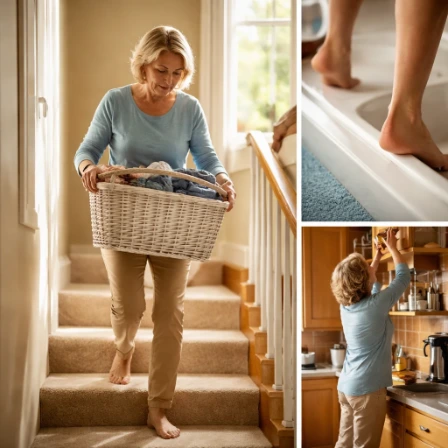
Small physical challenges accumulate quickly. Carrying a laundry basket downstairs, stepping over a bath edge, reaching a high shelf, or walking to the corner shop – none of these sounds dramatic, but each one can become genuinely difficult when strength, balance, or joint pain enters the picture.
Stairs are among the most common obstacles, and for good reason. A single flight can feel manageable one year and exhausting the next, particularly when fatigue or breathlessness is involved. Getting in and out of the bath unsupported carries real risk. Grocery runs require stamina that changes with age.
Falls deserve particular attention. Around one in three adults over 65 falls each year, but the fear of falling often does as much damage as a fall itself. People begin avoiding activity to stay safe, which gradually weakens the muscles that actually prevent falls.
Pain, poor vision, and cognitive changes all affect how confidently someone moves through a space. A dimly lit hallway or an awkward bathroom layout can turn a minor limitation into a genuine barrier. Some setbacks are temporary – a post-surgical recovery, a winter illness – but others signal longer-term change worth addressing proactively.
Supportive Changes Can Protect Freedom and Choice

Small, targeted changes to a home can make a difference to how safely and confidently someone moves through their day. Grab bars near the toilet and shower, non-slip flooring in the bathroom, better lighting in hallways, and a stairlift where stairs have become a genuine obstacle – none of these signal decline. They signal smart planning.
Rethinking room layouts matters too. Moving a bedroom to the ground floor, for instance, can remove one of the most common daily hazards without requiring major renovation.
Getting around the community deserves equal attention. When driving becomes difficult, ride-share services, community transport programs, and help planning errands around walkable routes can keep someone connected to the places that matter to them.
Canes, walkers, rollators, and scooters often expand what a person can do rather than limit it. There's no denying the right aid can restore confidence that fear of falling had quietly eroded.
An occupational therapist or physical therapist can assess individual needs and recommend changes that actually fit someone's home, body, and routine – rather than generic solutions that miss the mark.
Mobility Support Helps Independence Last Longer
Changing mobility does not mean losing control over daily life, and that distinction matters. Barriers at home, fear of falling, and limited access to transport can quietly shrink the world an older adult moves through – but none of these challenges are fixed or inevitable. Thoughtful home adaptations, from grab rails to rearranged furniture, reduce risk without reducing dignity. The right mobility aid, introduced at the right time, can restore confidence rather than signal decline. Professional support, whether from a physiotherapist, occupational therapist, or GP, helps people make informed choices rather than reactive ones. Staying safe, active, and connected remains achievable for most older adults when the right support is in place. Independence is rarely all-or-nothing. It lives in everyday choices, and protecting those choices – for as long as possible – is what good mobility support is really about.