Why Movement Matters Across Later Life
Decades of longitudinal research leave little ambiguity: regular physical activity (PA) is among the most consistently documented influences on healthy ageing (HA) trajectories. Adults who remain active into their sixties, seventies, and beyond show measurably slower declines in mobility, lower rates of injurious falls, and better preservation of physical function compared with sedentary peers. A 2022 meta-analysis drawing on data from over 180,000 older adults found that even moderate PA was associated with a 23% reduction in fall-related injury risk.
Benefits are not produced by a single activity type. Evidence suggests that four domains collectively support HA outcomes: aerobic capacity, muscular strength, balance, and flexibility. Each addresses distinct physiological vulnerabilities that accumulate with age.
Frequency, intensity, baseline health status, and consistency shape outcomes more than any particular exercise choice. An older adult with osteoarthritis managing low-impact aquatic sessions three times weekly may accrue comparable functional gains to a peer completing moderate cycling.
Comparing Structured Exercise With Everyday Movement

Planned exercise sessions and the incidental movement accumulated through daily routines are both recognized contributors to total physical activity (PA) exposure, though they differ considerably in intensity, duration, and context. Walking, swimming, and cycling represent some of the most accessible structured options for older adults – each is low-impact, adaptable to varying fitness levels, and supported by consistent evidence linking regular participation to improved cardiovascular and musculoskeletal outcomes.
Everyday movement occupies a different category. Gardening, household tasks, walking errands, taking stairs, and active hobbies such as dancing or bowls contribute meaningfully to weekly activity totals, even when no single bout meets conventional exercise thresholds. Evidence suggests this type of incidental activity may help reduce sedentary time, which is independently associated with adverse health outcomes in older populations.
There's no denying that intensity and duration vary considerably across these activities, complicating direct comparisons. A structured 45-minute swim differs markedly from an hour of light weeding, even if both register as "active." Both, however, matter.
Adapting Activity to Age, Ability, and Daily Routines
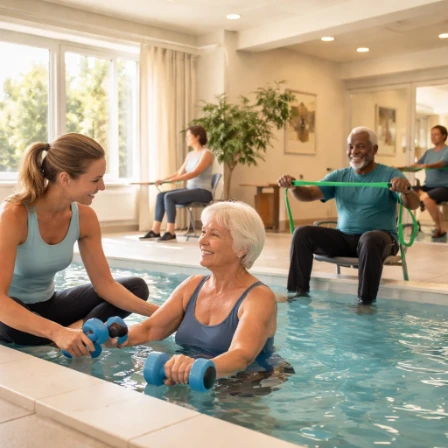
No single exercise template suits every older adult, and the evidence strongly supports individualized approaches that account for functional capacity, chronic conditions, and fall risk. Someone managing osteoarthritis will require a different entry point than a healthy 68-year-old returning to activity after years of sedentary work.
Water-based exercise reduces joint load considerably, making it well-suited to those with moderate mobility limitations or pain-related fatigue. Chair-based movement offers a similarly accessible option, allowing seated stretching, light resistance work with bands, and gentle range-of-motion exercises without requiring balance confidence.
Progressive resistance training remains relevant across a wide age range, though load increases should be gradual and guided by tolerance rather than fixed schedules. Balance practice, such as single-leg standing near a counter for support, addresses fall risk directly and can be integrated into everyday routines.
Prolonged sitting carries its own risks. Breaking sedentary periods with two to three minutes of light movement every thirty to forty minutes, whether a short walk or standing stretches, is associated with measurable benefits for metabolic and cardiovascular function.
Sustained, Varied Movement Best Supports Healthy Ageing
Evidence drawn from longitudinal cohort studies and systematic reviews consistently indicates that later-life physical activity (PA) is most effective when it reflects a varied pattern of movement rather than a single modality. Aerobic activity, resistance training, balance work, and flexibility exercises each address distinct physiological domains – muscle preservation, cardiovascular function, fall risk, and joint mobility – and the available evidence suggests these benefits compound when the modalities are combined.
Structured exercise programs and incidental daily movement, such as gardening, active commuting, or household tasks, are best understood as complementary rather than competing strategies, with reduced sedentary time representing an independent contributor to healthy ageing (HA) trajectories. For clinicians, public-health professionals, and policymakers, this framing supports individualized, multicomponent approaches to PA promotion that prioritize functional independence across diverse older populations, including those with chronic conditions or mobility limitations that preclude conventional exercise formats.